

Choosing a Home EV Charger: Tesla, Zappi and the Rest Compared
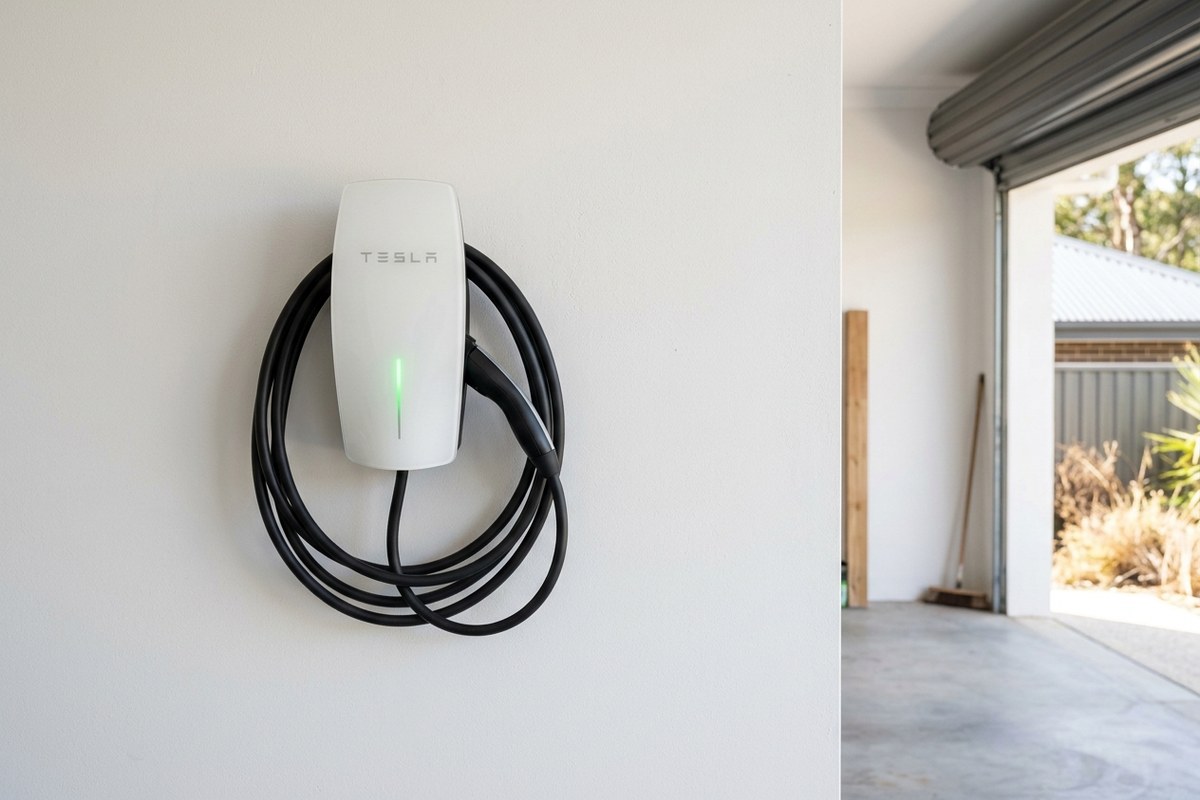
Charging an electric car at home is one of the quiet pleasures of EV ownership, you plug in overnight and wake up full. Once you've decided to fit a dedicated home charger, the next question is which one. There's a good range on the Australian market, and the right choice has less to do with the badge than with how well it suits the car, the home's supply, and the way it'll be used day to day.
Tethered or socketed?
The first fork is whether the charger comes with a fixed cable (tethered) or a socket you plug your own cable into (untethered). Tethered units are convenient, the cable is always there, ready to grab. Socketed units keep the cable tucked away, suit households with different connector needs, and look tidier on the wall. For a single car parked in the same spot every night, tethered is usually the easier daily experience; socketed offers a little more flexibility.
Smart features worth having
Most modern chargers are 'smart' to some degree, and a few features genuinely earn their keep. Scheduling lets the car charge during off-peak hours automatically. App control and energy tracking show what's going in and what it's costing. Solar integration can prioritise surplus daytime generation so the car runs on sunshine. And dynamic load management dials charging up or down so the home never exceeds its supply, especially useful on a board that's already busy. The trick is choosing features that match how the household actually lives rather than paying for ones that never get switched on.
Single-phase or three-phase
Charging speed depends on the home's supply and the car as much as the charger. Most homes are single-phase, and a standard single-phase charger comfortably refills a normal day's driving overnight. Some peninsula homes have three-phase, which can charge faster if the vehicle supports it. There's little point buying a high-output three-phase unit for a car or a supply that can't use it, so matching the charger to the actual setup matters more than chasing the biggest number.
How the popular options compare
A few names come up often. The Tesla Wall Connector is sleek and well-priced and, despite the badge, charges any compatible EV, not just Teslas. The Zappi from myenergi is popular with solar owners for its ability to charge from surplus solar. Other reputable units from established electrical brands offer solid smart features and broad compatibility, and many support open standards so they aren't locked to one app or car. None is universally 'best', the right unit is the one matched to the car, the supply, the desired features and the budget, installed cleanly by someone who'll stand behind it.
Placement, weatherproofing and installation
Where the unit goes matters for daily convenience: mounted near where the car parks, at a sensible height, with the cable reaching the charge port without a stretch. A carport or exposed wall calls for a weather-rated unit, which matters even more in coastal air. As with any high-load circuit, a home charger must be installed by a licensed electrician on its own circuit with the right protection, connected to the switchboard and certified. Done well, it simply works every night for years.
The best starting point is a look at the switchboard and a chat about the car and the driving. From there it's easy to narrow the field to a unit that fits, rather than getting lost comparing spec sheets.
Matching the charger to your driving
It's easy to fixate on charging speed, but most households need less than they think. Overnight charging on a standard home unit comfortably replaces a typical day's driving for the average commuter, so the fastest, highest-output charger is often unnecessary. The better questions are how far the car travels on a usual day, whether it sits at home overnight, and whether a second EV might join later. Sizing the charger and its circuit to realistic daily needs, with a little headroom, usually lands on a more sensible unit than chasing the biggest number on the box.
Frequently Asked Questions
Does a Tesla Wall Connector only work with Teslas?
No. The Tesla Wall Connector charges any compatible EV with the standard connector used in Australia, not just Tesla vehicles. Brand-tied apps differ, but the charging itself is broadly compatible across cars.
Is a tethered or untethered charger better?
It comes down to convenience versus flexibility. Tethered is easiest for one car in the same spot each night; untethered keeps the cable away and suits homes with varied connector needs or a preference for a tidier wall. Both are fine choices.
Do I need solar to make a smart charger worthwhile?
No. Scheduling, load management and energy tracking are useful without solar. Solar integration is a bonus if you have panels or plan to, letting the car top up from surplus generation, but it isn't essential to benefit from a smart unit.
Can I install a home charger myself?
No. A home charger is a new high-load circuit connected to the switchboard and must be installed and certified by a licensed electrician to the current standards. Self-installation isn't safe or compliant.
Talk to a Local Central Coast Electrician
Choosing a Charger for Your EV? A licensed local electrician can match the right home charger to your car, your supply and your driving, then install it cleanly. Chat with our team for a straight recommendation.