

Cutting Your Power Bill in Woy Woy: Practical Electrical Upgrades That Pay Off
Power bills are a sore point for plenty of Central Coast households, and while a lot of advice focuses on switching providers or remembering to turn things off, some of the most reliable savings come from the electrical side of the home itself. A handful of practical upgrades can cut what a Woy Woy household pays without anyone having to live in the dark or the cold, and several of them pay for themselves over time.
Lighting is the easiest win
If a home still runs older halogen or incandescent globes, swapping to LED is the simplest saving available. LEDs use a fraction of the energy for the same light and last many years longer, so the saving comes from both lower running costs and far fewer replacements. In a home with a lot of downlights, common in Woy Woy's renovated and newer homes, the difference across the whole house adds up quickly, and the changeover is straightforward.
Hot water: the quiet budget-eater
Heating water is one of the largest slices of a typical household's energy use, so it's a prime target. An ageing electric storage system running on a standard tariff can be expensive, and there are several ways an electrician can help: moving an electric hot water system onto a controlled off-peak tariff so it heats when power is cheapest, or supporting a switch to a more efficient heat-pump system that uses far less electricity for the same hot water. Getting the tariff and wiring right is the part that needs a licensed electrician.
See where the power actually goes
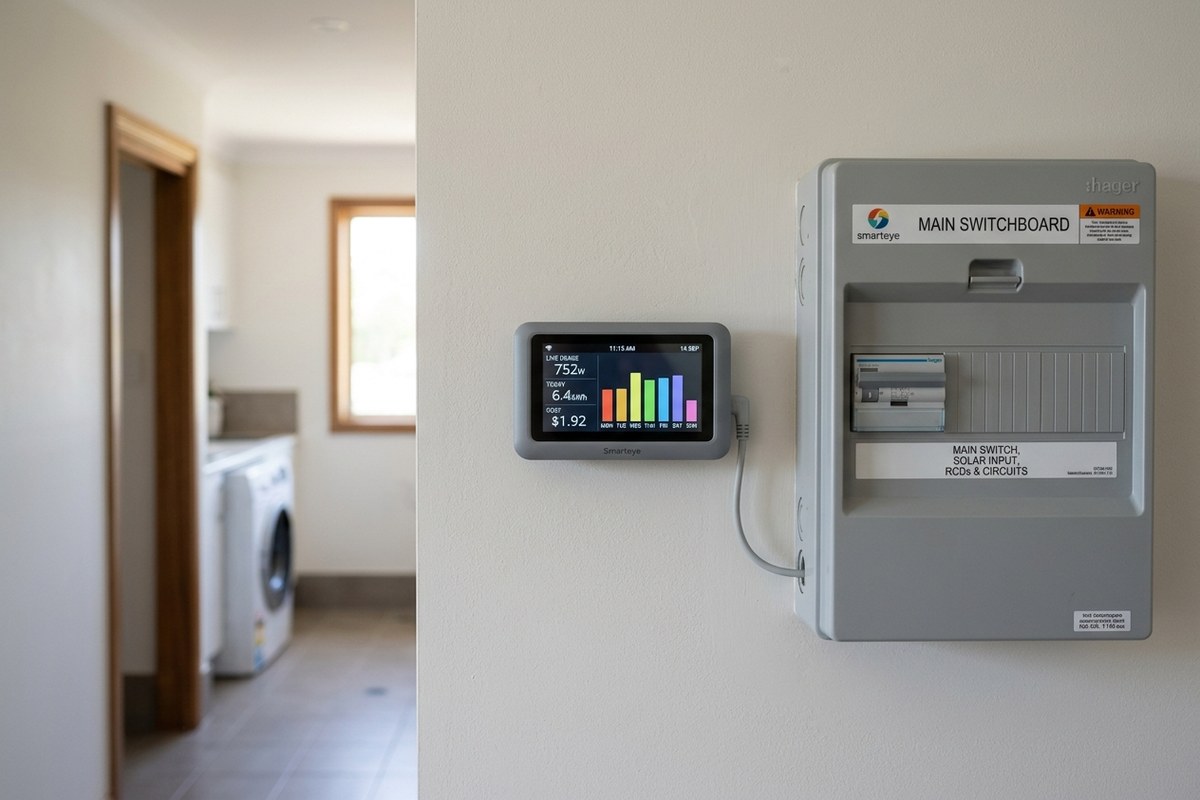
It's hard to cut what you can't see. A switchboard-mounted energy monitor shows in real time which parts of the home are drawing power and when, turning vague guesswork into clear information. Households are often surprised by what's quietly costing them, a second fridge, an old pool pump, or a heater left running, and that visibility makes it far easier to change habits and target the next upgrade where it'll do the most good.
Tackle the big appliances and standby loads
Older appliances and equipment can draw far more than their modern equivalents. Pool pumps are a frequent culprit on the coast, where an inefficient or oversized pump running long hours can dominate a bill; fitting a timer or moving to an efficient variable-speed pump can make a big dent. Beyond that, the steady drain of devices left on standby across a whole house adds up, and arranging switched circuits or points for the worst offenders makes it easy to shut them off properly rather than leaving them humming around the clock.
Solar, batteries and using power when it's cheapest
For households ready to invest, solar is the larger lever, and getting the most from it is partly an electrical question. Shifting big loads, the dishwasher, the pool pump, hot water, EV charging, to run during the day when rooftop solar is generating means using your own free power instead of buying it from the grid. Timers, smart switches and correctly configured circuits all help line up consumption with generation, and an electrician can set the home up so the solar investment delivers as much as it can.
Start with an assessment, not a guess
The most cost-effective path varies from home to home, which is why a walk-through with a licensed electrician beats guessing. Looking at the switchboard, the hot water setup, the lighting, the major appliances and how the household uses power points to the upgrades that will actually move the bill, rather than spending money on changes that look good but barely register. Many of the best savings are modest jobs with a genuine payback period.
Heating and cooling smartly
Heating and cooling swing a Woy Woy bill more than almost anything else, especially through a humid summer and the cooler coastal nights. Old plug-in heaters and tired air conditioners are expensive ways to stay comfortable, and a modern reverse-cycle system on a properly sized circuit does the same job for far less. Just as important is how it's run: conditioning only the rooms in use, setting sensible temperatures, and using timers so nothing runs all day in an empty house. An electrician can make sure the circuit and wiring suit the system, which keeps it running efficiently and safely.
Frequently Asked Questions
What's the single best electrical change to lower my bill?
It depends on the home, but for many households switching old lighting to LED and addressing hot water, through an off-peak tariff or an efficient heat-pump system, deliver the most reliable savings.
Does moving hot water to off-peak really save money?
It can, by heating water when electricity is cheapest rather than at peak rates. Whether it suits depends on your system, tariff and usage, which an electrician can assess and wire correctly.
Are energy monitors worth installing?
For many households, yes. Seeing real-time usage makes it far easier to identify what's costing the most and to measure whether changes are actually working, rather than guessing from the quarterly bill.
Will solar cut my bill on its own?
Solar helps most when you use power while it's generating. Shifting big loads to daytime and setting circuits up to suit means you use more of your own solar rather than exporting it cheaply and buying back at night.
Talk to a Local Central Coast Electrician
Want to bring your power bill down? A local Woy Woy electrician can pinpoint where your home is wasting energy and carry out the upgrades that make a real, lasting difference to your bill.