

EV Charger Installation in Woy Woy: Charging at Home the Right Way
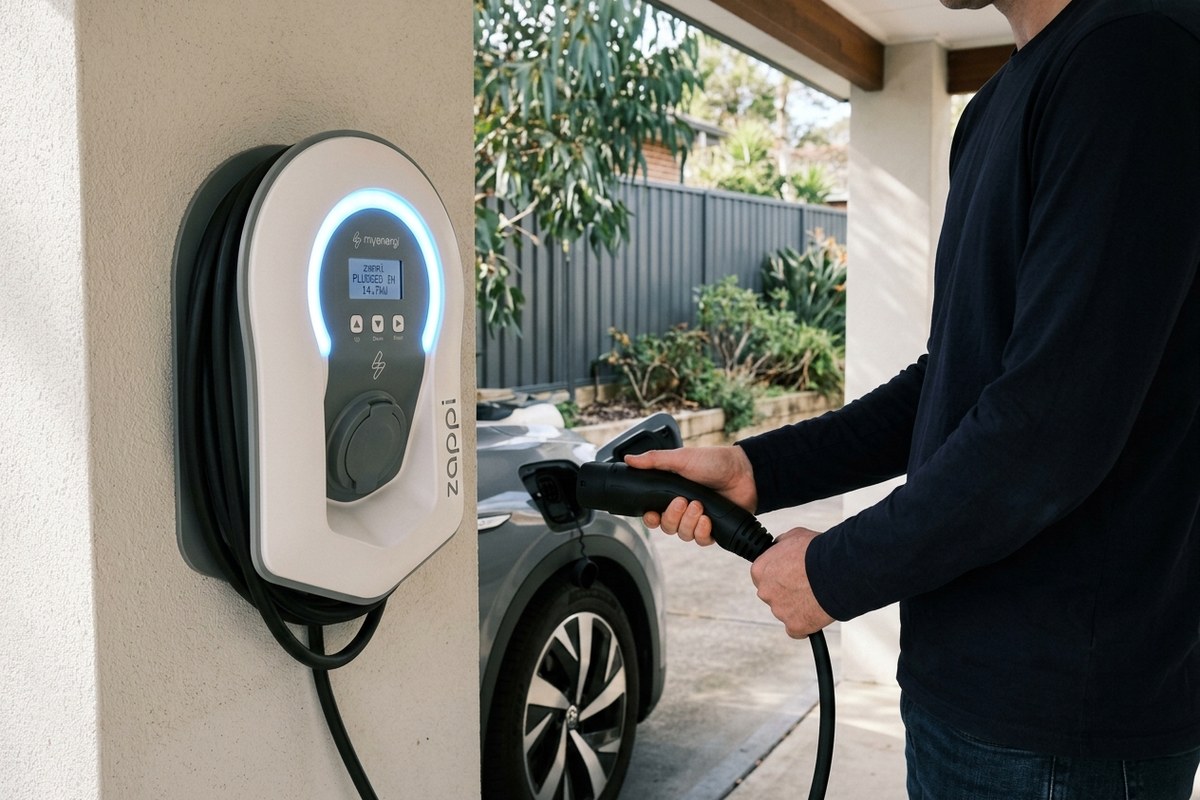
If you've bought an electric vehicle, or you're about to, charging at home is one of the best things about it, you wake up each morning with a full battery and rarely think about public chargers. But getting there properly means more than plugging into the nearest power point. A dedicated home charger is faster, safer and far better suited to daily use.
It's tempting to just use a standard wall socket with the cable that came with the car. That works in a pinch, but it's slow, and ordinary power points and circuits aren't designed for the sustained high load of charging a car for hours at a time. A dedicated EV charger (often called a wallbox) charges much faster, includes built-in protection designed for the job, and runs on its own circuit so it isn't competing with the rest of the house.
One of the first questions is single-phase versus three-phase. Most homes have a single-phase supply, which suits a standard wallbox that will comfortably charge overnight for typical daily driving. Some peninsula homes have three-phase, which can support faster charging if your vehicle accepts it. Which is right depends on your supply, your car, and how much you drive, a quick check of your switchboard tells an electrician what you're working with.
Load management is worth understanding, especially in older homes. Adding a car charger is a significant new load, and the existing switchboard and supply need to handle it alongside everything else. Modern chargers can include smart load management that automatically dials charging up or down so the home never exceeds its limit, handy if your board is closer to capacity, or if you're also running solar, a battery, or ducted air conditioning.
Where the charger goes matters too. Most people mount it in the garage or carport near where they park, at a sensible height with the cable able to reach the car's charge port without stretching. A tidy installation runs the supply cable cleanly and concealed where possible, with the unit weather-rated if it's exposed. A good installer will walk the site with you, work out the neatest cable route from the board, and place the unit where it's convenient day to day.
Solar owners have an extra opportunity. With the right charger and setup, you can prioritise charging your car from surplus solar during the day, effectively running on sunshine rather than grid power. If you have solar, or plan to, it's worth mentioning, because it can influence which charger suits you best.
As with any significant electrical work, a home EV charger must be installed by a licensed electrician. It involves a new high-load circuit, protective devices, and a connection to your switchboard, all of which has to be done to the current standards and certified. Done properly, you get fast, safe, reliable charging that just works every night, and an installation that's ready for your next car too.
If you're weighing up a home charger, the best starting point is a look at your switchboard and a chat about your car and your driving. From there it's easy to recommend the right unit and the cleanest way to install it.
Modern chargers come with features worth knowing about. Many connect to an app so you can schedule charging for off-peak times, track energy use, and set limits; some integrate with solar to top up the car from surplus generation; and most include the safety devices required for EV circuits built in. You don't need every feature, but it helps to know what's available so you choose a unit that fits how you'll actually use it.
Future-proofing is worth a moment's thought as well. If there's any chance of a second EV, a larger battery vehicle, or adding solar and a home battery down the line, mention it. Sizing the circuit and choosing the charger with that in mind now can save reworking the installation later. A short conversation about where you're headed often changes the best recommendation today.
Finally, a word on choosing a charger. There are several well-regarded brands on the Australian market, and the right one depends on your car, your supply, whether you want smart features, and your budget. Rather than fixating on a brand name, focus on a unit that's properly matched to your home and installed cleanly by someone who'll back the work, that's what delivers years of trouble-free charging.
It's also worth planning the cable route and parking position before installation day. Knowing exactly where the car sits, where the port is, and where the board is lets the electrician run the supply neatly and place the unit so the cable reaches easily every time. Small details like that are the difference between a tidy, convenient install and one that's a daily annoyance.
Frequently Asked Questions
Can I just use a normal power point to charge my EV?
You can in a pinch, but it is slow, and ordinary power points are not designed for the sustained high load of charging a car for hours. A dedicated charger is faster, safer and runs on its own circuit.
How quickly will a home charger charge my car?
A typical single-phase home charger comfortably replaces a normal day of driving overnight. Three-phase or higher-output units charge faster, provided the vehicle and the home supply support it.
Can I charge the car from my solar?
With the right charger and setup, yes. Surplus daytime solar can be prioritised to top up the car instead of drawing from the grid, so it is worth mentioning if you have solar or plan to.
Does an EV charger have to be installed by an electrician?
Yes. It is a new high-load circuit connected to the switchboard, so it must be installed and certified to the current standards by a licensed electrician.
Talk to a Local Central Coast Electrician
Ready to Charge at Home? Our licensed Woy Woy electricians can recommend the right home charger and install it safely and neatly. Chat with our team for advice and a free quote.