

Garage and Workshop Electrical in Woy Woy: Power That Keeps Up With the Work
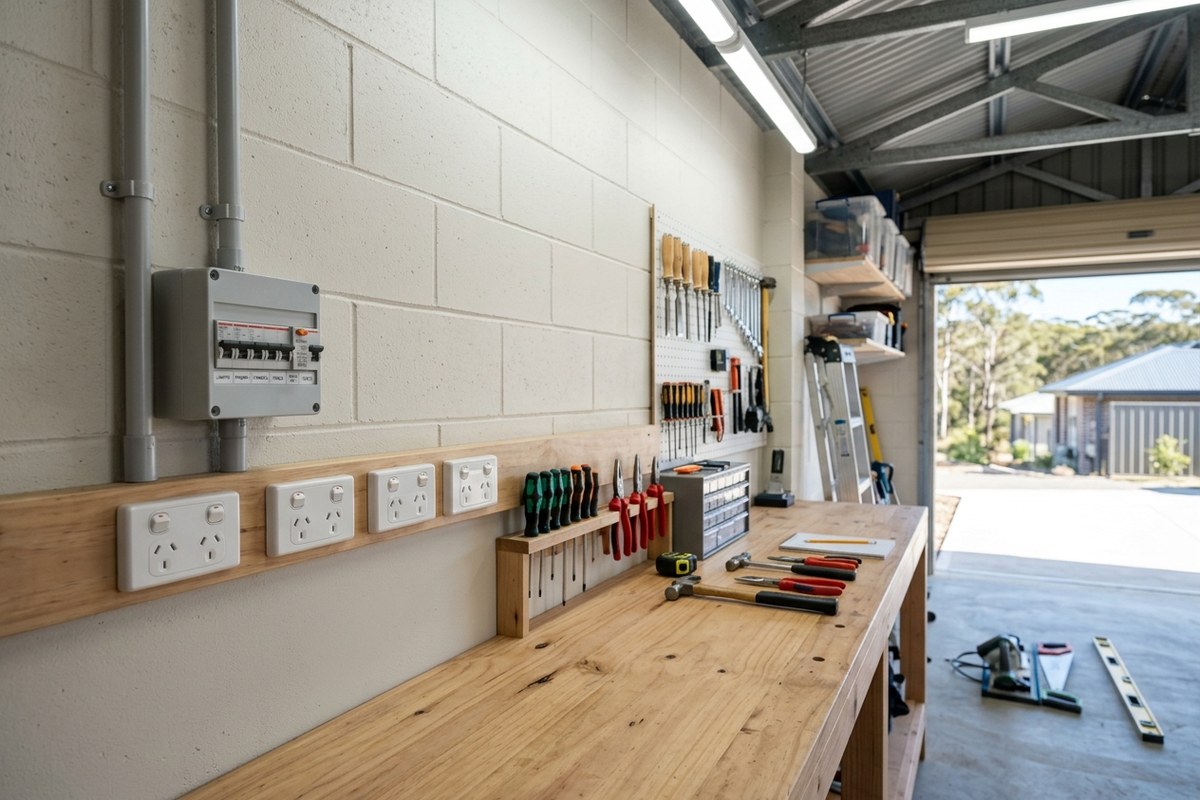
The garage and the backyard shed quietly do a lot of work in a typical Woy Woy home. They store the second fridge and the freezer, run power tools, charge the e-bike, and increasingly serve as a home gym, workshop or hobby space. Yet many of these spaces were wired for little more than a single light and one power point, and the result is a tangle of double adaptors and extension leads doing a job they were never meant to do.
Setting up a garage or workshop properly isn't just about convenience. Overloaded circuits, daisy-chained power boards and inadequate wiring are genuine fire and shock risks, and the fix is usually more straightforward and affordable than people expect.
The tell-tale signs of an under-powered space
A few symptoms point to a garage that has outgrown its wiring: breakers that trip when the heater and a power tool run together, power boards plugged into power boards, a single point stretched across the whole space by extension leads, and lights that dim when a big tool kicks in. None of these are quirks to live with, they're signs the circuit is being asked to do more than it safely can.
Enough circuits and points for how the space is used
The foundation of a good workshop is having enough properly installed power points on enough separate circuits. Power-hungry tools, a welder, a compressor, a table saw, a large dust extractor, can draw heavily, and running them on the same circuit as everything else invites nuisance tripping. Dedicated circuits for the heavy gear, plus plenty of general outlets at bench height around the walls, mean tools can run without competing for supply and without a floor full of leads.
Plan for the appliances that run constantly
A second fridge or chest freezer in the garage runs around the clock, and it's worth making sure it sits on a reliable circuit so a tripped breaker doesn't quietly defrost a freezer full of food unnoticed. Pointing these loads out to an electrician helps shape a layout that suits the space.
Lighting that lets you see the work
Workshop lighting is a safety issue as much as a comfort one, it's hard to use sharp, fast-moving tools safely in poor light. Bright, even LED lighting across the whole space, with extra task lighting over the bench and any fixed machinery, makes a real difference and costs little to run. Sensor or switched lighting at the entry is a handy addition for when your hands are full.
Three-phase, sub-boards and EV charging
Some workshops eventually need more than a standard single-phase supply can comfortably give. Larger machinery may call for three-phase power, and a detached shed or studio often benefits from its own sub-board so it can be isolated and protected separately from the house. Garages are also the natural home for an EV charger, which needs its own dedicated circuit sized correctly for the unit. Each of these is a job to plan with an electrician, who can confirm whether the existing switchboard and supply can take the extra load or need upgrading first.
Safety switches belong here too
Garages and workshops are damp-prone, full of metal tools and the kind of place where cords get nicked and worn. That makes residual current devices (safety switches) particularly important, as they cut power quickly if a fault could otherwise deliver a dangerous shock. An older garage circuit may not have this protection, and adding it is a worthwhile upgrade for any space where power tools are used.
Keeping it tidy and safe
A working garage collects cords, and how they're managed makes a difference to safety. Fixed wiring run neatly in conduit or trunking, with power points positioned where the tools and benches actually sit, removes the trip hazards and pinch points that come with leads snaking across the floor. It also keeps cables away from heat, blades and moving machinery. Planning the layout so that points sit at bench height around the walls, rather than relying on a single outlet and a web of extension leads, is one of the simplest ways to make a workshop both more usable and safer to work in.
Frequently Asked Questions
Why does my garage breaker trip when I use power tools?
Usually because the circuit is overloaded, the tool's draw, combined with other appliances on the same circuit, exceeds its rating. The fix is generally adding dedicated circuits and more points rather than resetting the breaker each time.
Is it safe to run a freezer or fridge off an extension lead in the garage?
It's not ideal. Extension leads and power boards aren't designed for permanent appliance use and can overheat or fail. A properly installed power point on a suitable circuit is the safer long-term solution.
Can I add an EV charger in my garage?
In most cases yes, but it needs its own dedicated circuit correctly sized for the charger, and the switchboard and supply should be checked first to confirm they can handle the extra load.
Do I need three-phase power for a home workshop?
Only if you're running machinery that requires it. Many home workshops run fine on a well-designed single-phase setup; three-phase is worth considering for larger or industrial-grade equipment.
Talk to a Local Central Coast Electrician
Need more power in the garage or shed? Whether it's a home workshop, a tool-heavy garage or a future EV charger, a local Woy Woy electrician can add the circuits and points to do it safely.