

Home Rewiring in Woy Woy: Signs Your Wiring Has Had Its Day
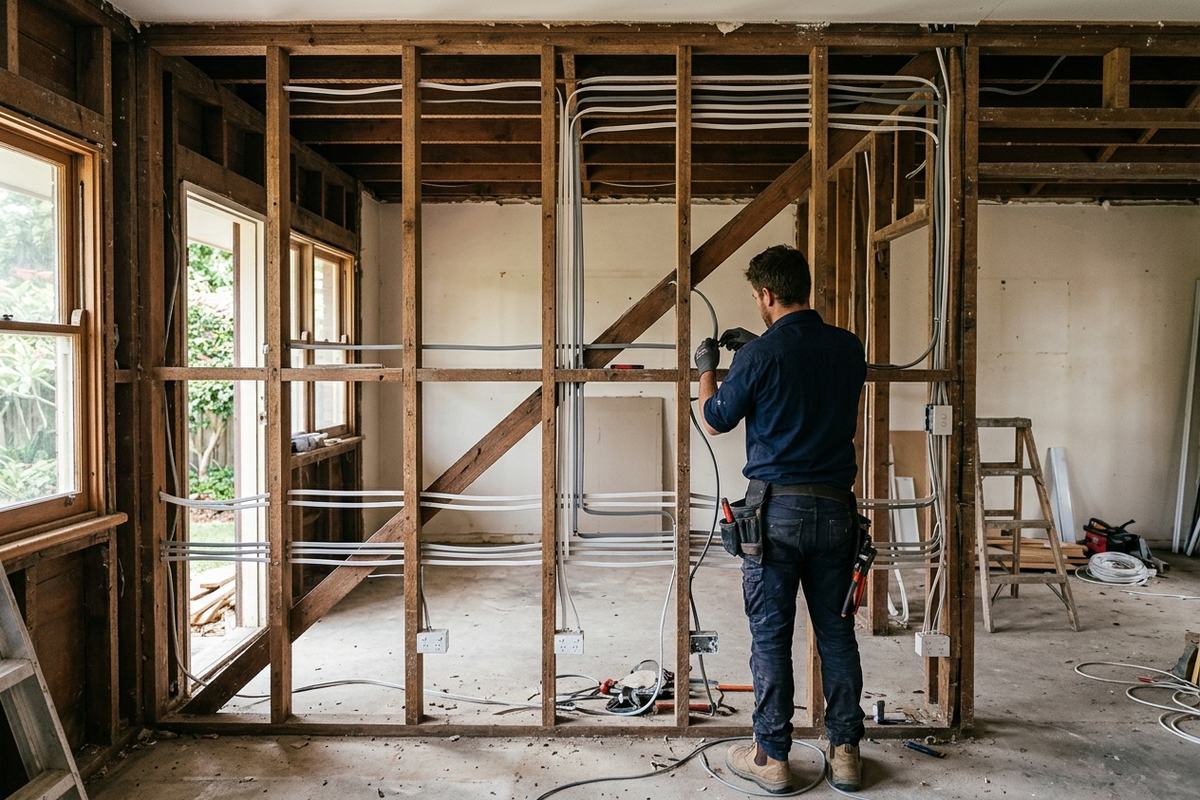
Plenty of homes on the Woy Woy peninsula are older cottages and post-war builds with real character, but behind the walls, the wiring can be decades past its prime. Electrical cabling doesn't last forever. Insulation hardens and cracks, connections loosen, and a system designed for a 1960s household struggles with the demands of modern living. Knowing the signs of tired wiring is the first step to keeping your home safe.
There are some clear warning signals. Lights that flicker or dim when an appliance kicks in, power points that are warm to the touch or have scorch marks, a faint burning smell with no obvious source, frequent tripping, or fuses that blow regularly all point to wiring under stress. Cloth or rubber-insulated cabling, only a couple of power points per room, or the absence of an earth on older circuits are signs the system belongs to another era. Any of these is worth getting checked promptly.
The risks of leaving it are real. Ageing or damaged wiring is one of the leading causes of electrical fires, and degraded insulation raises the chance of shocks. It's not about scaremongering, it's that wiring is hidden, so problems develop unseen until something goes wrong. A professional inspection brings those hidden issues into the light before they become dangerous.
A rewire isn't always all-or-nothing. After an inspection, a licensed electrician can tell you whether you need a full rewire or whether targeted work on specific circuits will do. Sometimes the safest, most cost-effective path is to replace the worst circuits and the switchboard now and stage the rest; other times a full rewire is the sensible call, particularly during a renovation when walls are already open.
Speaking of renovations, timing matters. The least disruptive time to rewire is when you're already renovating and wall linings are off, the cabling can be run through open framing easily and neatly. If the home is occupied and finished, a good electrician plans the work to minimise mess, using existing cavities and access points, and keeps disruption to a minimum. Either way, the goal is a tidy job that leaves your walls and your routine intact as much as possible.
What does a rewire actually deliver? Modern cabling rated for today's loads, more power points where you actually need them, dedicated circuits for heavy appliances, proper earthing throughout, and a switchboard with safety switches protecting every circuit. In short, a home that's safe, compliant, and ready for solar, batteries, EV charging or whatever comes next, without the worry of what's lurking behind the plaster.
It's also a smart move if you're buying or selling. For buyers, an inspection of an older home's wiring is cheap insurance against an expensive surprise. For sellers, knowing the wiring is sound, or having addressed it, removes a common sticking point. Electrical safety is one of those things that quietly affects a property's value and saleability.
Rewiring is significant work and must be carried out by a licensed electrician, tested and certified to the current standards. It's not a place for shortcuts. If your home is showing any of the signs above, or it simply hasn't been looked at in a very long time, the safest first step is a proper inspection so you know exactly what you're dealing with, and what, if anything, needs doing.
It helps to understand why wiring ages. Heat is the main enemy, decades of warming and cooling makes old insulation brittle until it cracks and flakes away from the conductor. Rodents in roof and wall cavities chew cabling. And many older homes have a history of well-meaning but non-compliant additions, an extra power point here, a shed circuit there, that quietly overload the original design. None of this is visible day to day, which is exactly why a professional inspection is so valuable.
People always want to know what drives the scope and cost of a rewire. The big factors are the size of the home and the number of circuits, how accessible the wiring is (a single-storey home with a roof space is easier than a two-storey with no access), whether you're doing a full rewire or staging it, and whether the switchboard and main supply need upgrading at the same time. A proper inspection lets an electrician give you an accurate plan rather than a vague guess.
When the work is done, you should receive a Certificate of Compliance for the electrical work, your proof that it was carried out and tested to the current standards. Keep it with your home records; it matters at sale time and for insurance. It's one more reason rewiring is firmly a licensed-electrician job, not somewhere to cut corners.
Frequently Asked Questions
How do I know if my house needs rewiring?
Common signs include flickering lights, power points that are warm or scorched, frequent tripping, a faint burning smell, and old cloth or rubber-insulated cabling. An inspection confirms the true condition of the wiring.
Can I stay in the house during a rewire?
Usually yes. A good electrician stages the work and uses existing access to keep disruption down, though there will be some planned periods without power along the way.
Does the whole house have to be rewired at once?
Not always. After an inspection, the worst-affected circuits and the switchboard can be done first and the rest staged, or a full rewire completed in one go if that is the sensible call.
Do I get paperwork once a rewire is done?
Yes, a Certificate of Compliance for the electrical work. It is worth keeping with your home records for insurance and any future sale.
Talk to a Local Central Coast Electrician
Worried About Your Home's Wiring? Our licensed Woy Woy electricians can inspect your wiring, tell you honestly where it stands, and plan a rewire with minimal disruption. Chat with our team to get started.