
How Many Solar Panels Does a Woy Woy Home Need?
One of the first questions people ask about solar is simply: how many panels do I need? It's a sensible question, but the honest answer is that it depends far more on how a household uses power than on how much roof it has. A system sized to the home's actual consumption pays its way; one sized to fill the roof, or picked off a template, often disappoints. Here's how the right size is worked out for a peninsula home.
Start with how you use power
The starting point is consumption: how much electricity the home uses, and just as importantly, when. A household that's home and using power during the day suits a different system to one that's empty until evening. Recent power bills and usage data tell the real story, and a good installer looks at them rather than guessing. The aim is to match generation to the load the household can actually use.
Self-consumption is the real prize
The biggest savings come from using your own solar directly rather than exporting it. Feed-in tariffs credit exported power, but at modest rates, so the value lies in running the dishwasher, washing machine, pool pump or air conditioning during daylight. That's why sizing isn't just about maximum output, it's about how much of the generation the home will genuinely self-consume. A larger array that mostly exports for a small return isn't always the better buy.
Roof, orientation and peninsula shading
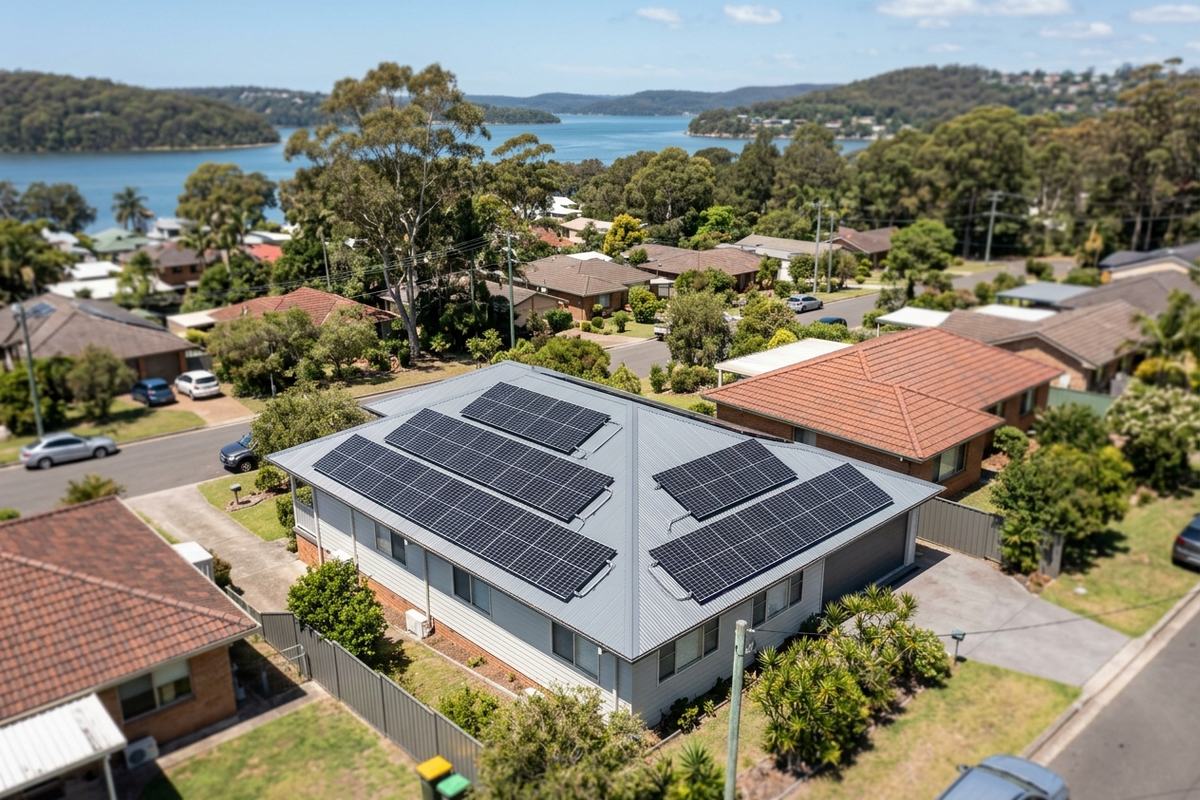
The roof shapes what's possible. North-facing panels capture the most across the day, while east-west splits suit morning-and-evening households. Roof pitch, available area, and shading from trees or neighbours all matter, and on leafy peninsula blocks, shading is a real factor worth assessing properly. Sometimes a slightly smaller, well-placed array outperforms a bigger one partly in shade, so panel placement is as important as panel count.
Allow for what's coming
Sizing should look forward, not just at today. An EV, a pool, a growing family or a future battery all change the picture, and it's usually cheaper to size sensibly now than to add to a system later. If a battery is likely, generating a healthy daytime surplus to store makes sense; if an EV is on the way, daytime charging changes the maths again. A short conversation about plans helps size the system for the next few years, not just this one.
Quality and inverter sizing matter too
Panel count is only part of the equation. The inverter needs to be correctly sized to the array, and choosing a hybrid or battery-ready inverter leaves the door open for storage later. Quality panels with strong warranties hold their output better over the system's life than the cheapest option, so value across ten to fifteen years beats the lowest headline price. The right number of the right panels, well placed, is what delivers.
There's no single magic number, the right system size is the one matched to a home's usage, roof and plans. An honest assessment that looks at real consumption and the roof itself will land on a size that actually pays for itself, rather than a guess based on floor area.
Reading a quote: panel count isn't everything
When comparing solar quotes, the number of panels is only one line. Two quotes with the same panel count can differ markedly in the quality of the panels and inverter, the warranties, who handles a warranty claim, and whether the design is genuinely sized to the home's usage or dropped in from a template. A slightly smaller, better-specified system from an installer who sizes it properly often beats a larger, cheaper one on a generic design. It pays to read past the headline kilowatts to what is actually being installed.
Frequently Asked Questions
Can't I just size solar by the size of my house?
Floor area is a poor guide. Two similar-sized homes can use very different amounts of power depending on occupancy and habits. Sizing from actual usage data is what produces a system that pays its way rather than over- or under-shooting.
Is a bigger system always better?
Not necessarily. If most of the extra generation is exported for a small feed-in return, the additional panels may not earn their keep. The sweet spot is a system whose output the household can largely self-consume, with some headroom for future loads.
Does shading from trees really matter on the peninsula?
Yes. Shade across part of an array can noticeably cut output, so placement and panel layout are assessed carefully on leafy blocks. Sometimes a well-placed smaller array beats a larger one that sits partly in shade through the day.
Should I size for an EV or battery I don't have yet?
If they're likely within a few years, it's worth factoring in, daytime EV charging and battery storage both change how much generation is useful. Sizing and choosing the inverter with that in mind now is cheaper than expanding the system later.
Talk to a Local Central Coast Electrician
Want the Right-Sized Solar System? A licensed local installer can size a system to how you actually use power, not a generic template. Chat with our team for an honest assessment of your roof and usage.