

Salt Air and Your Electrics: Protecting a Woy Woy Peninsula Home
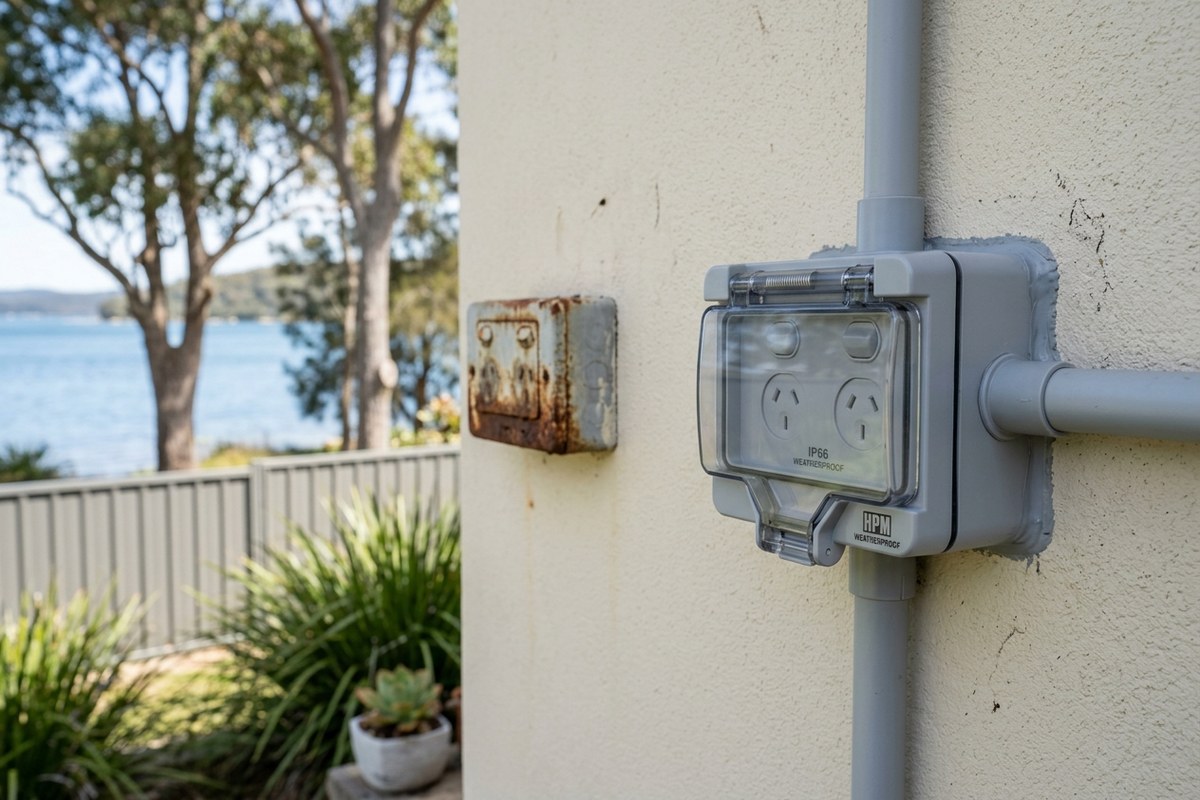
The Woy Woy peninsula is a wonderful place to live, wrapped by Brisbane Water and a short hop from the ocean. That same salt-laden air that makes the coast so pleasant is quietly hard on a home's electrical fittings. Over years, airborne salt settles on metal, draws in moisture, and accelerates corrosion on the parts of an electrical system that live outdoors or breathe outside air. Knowing where it bites, and what to do about it, keeps a coastal home safe and reliable.
Why salt air is tough on electrical fittings
Salt is hygroscopic, meaning it attracts and holds moisture from the air. On metal surfaces, screw terminals, enclosure hinges, light fittings, antenna brackets, the steel inside a meter box, that constant damp-salt film sets up corrosion far faster than it would happen inland. Corroded connections are not just unsightly; a connection that has gone green or crusty has higher resistance, which means heat, voltage drop, flickering, and in the worst cases a fault. The closer a home sits to open water, the more pronounced the effect.
Where to look around the home
A few spots are worth a periodic glance. Outdoor power points and their covers, exterior light fittings and sensors, the air-conditioning isolator switch on the wall, the meter box and its door, garden and pool equipment, and any antenna or satellite mounts all sit in the firing line. Inside an older meter box, the giveaway signs are rust streaks, a stiff or seized door, white or green powder around terminals, and discoloured or pitted metal. None of these should be poked at by a homeowner, they're simply the cues that it's time to have a licensed electrician take a proper look.
Choosing fittings that last on the coast
The most effective defence is using the right gear in the first place. Weather-rated fittings with a suitable IP (ingress protection) rating, marine-grade or corrosion-resistant materials, stainless fixings, and quality enclosures all dramatically slow the damage. Outdoor power points should have proper weatherproof covers that actually close, and external penetrations should be sealed so moisture isn't drawn into the wall or the back of a fitting. When something is being replaced anyway, stepping up to coastal-grade hardware is money well spent on the peninsula.
Maintenance that genuinely helps
Coastal electrical kit benefits from the occasional professional check rather than a set-and-forget approach. An electrician can clean and re-tension terminals before corrosion takes hold, replace perished seals and covers, swap out fittings that are too far gone, and confirm the earthing and connections are sound. A rinse of accessible exterior fixtures with fresh water after particularly salty, windy spells helps too, though anything involving opening a fitting or the switchboard is strictly a licensed job.
Don't forget the switchboard and earthing
The switchboard and the home's earthing system deserve special attention near the water, because they're the parts that keep everyone safe. Corrosion on main connections or the earth can quietly undermine protection without any obvious symptom. A board in a coastal home is worth inspecting as part of general upkeep, and if it's an older fuse board in a rusty enclosure, that's doubly true. Sorting it before it becomes a fault is far less stressful than dealing with a failure.
Salt air is simply a fact of peninsula life, and it doesn't mean constant problems, it just means using the right fittings, keeping an eye on the exposed parts, and having a licensed electrician check and maintain them now and then. Do that, and a coastal home's electrics stay every bit as safe and reliable as one inland.
Solar and batteries on the coast
The same salt air that troubles power points and fittings also affects rooftop solar and home batteries, so coastal homes benefit from gear chosen with the environment in mind. Quality panels use corrosion-resistant frames and fixings, mounting rails should be marine-grade or suitably coated, and an inverter or battery is best located out of direct salt spray and harsh afternoon sun, a sheltered wall or garage rather than a fully exposed seaward face. Outdoor cable entries and isolators need proper weatherproofing too. None of this rules out solar or storage near the water; it simply means specifying coastal-appropriate hardware and placement so the system lasts its full life rather than ageing prematurely in the sea air.
Frequently Asked Questions
How quickly does salt air actually damage electrical fittings?
It depends on how close the home is to open water and how exposed the fittings are, but coastal corrosion is gradual rather than sudden. Homes within sight of the water and fittings on weather-facing walls show it soonest, which is why periodic checks matter more near the coast.
Are outdoor power points safe near the water?
Yes, when they're weather-rated, properly sealed, and fitted with covers that close. The risk comes from cheap or perished fittings, damaged covers, or moisture getting behind them, so coastal-grade hardware and the occasional check are the key.
Can I clean corrosion off myself?
Rinsing the outside of accessible fixtures with fresh water is fine, but anything that involves opening a fitting, the meter box or the switchboard should be left to a licensed electrician. Corroded connections can be live and need proper assessment, not a scrub.
What's the single best thing I can do for a coastal home?
Use weather-rated, corrosion-resistant fittings and have a licensed electrician give the outdoor fittings, switchboard and earthing a periodic once-over. Catching a corroded connection early is far cheaper and safer than waiting for it to fail.
Talk to a Local Central Coast Electrician
Worried About Corrosion on a Coastal Home? A licensed local electrician can check your outdoor fittings, switchboard and connections for salt damage and put anything dodgy right. Chat with our team for a straightforward assessment.