

Getting Your Woy Woy Home Solar-, Battery- and EV-Ready
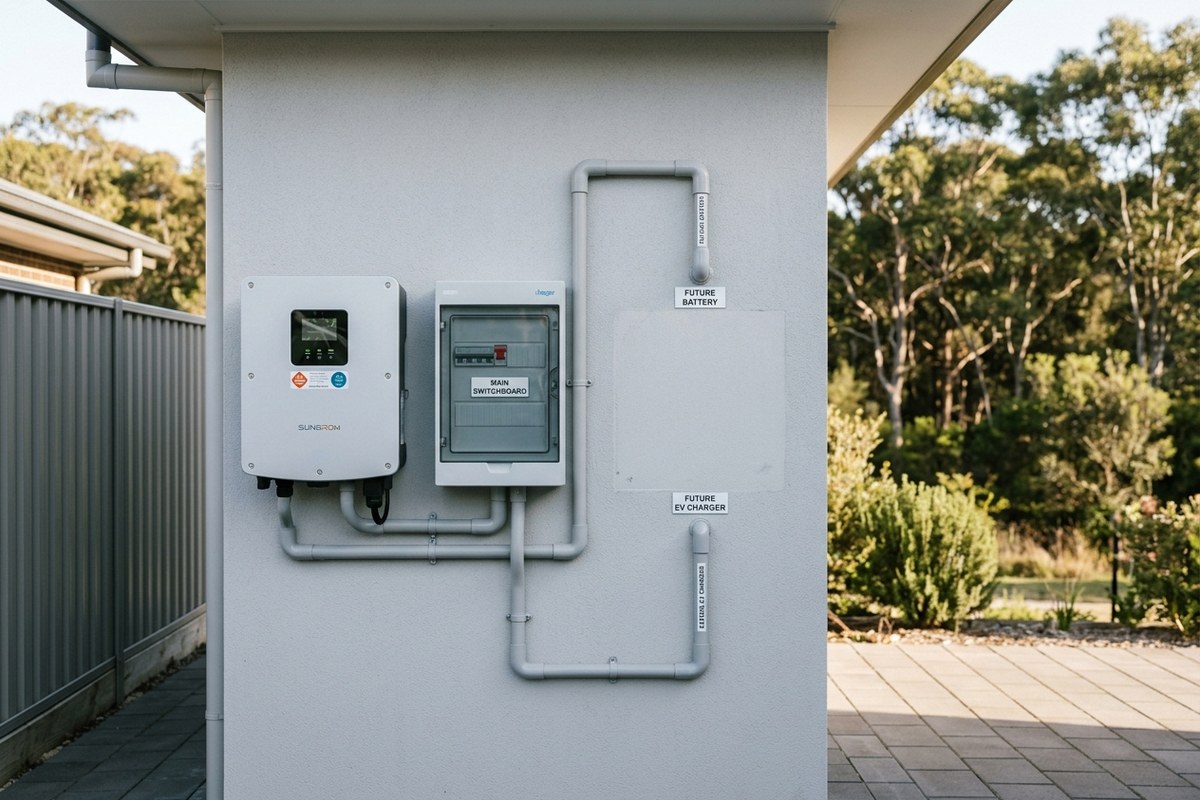
Homes are steadily electrifying, solar, batteries and electric cars are moving from nice-to-have to mainstream. Even if none of them is in this year's budget, a little planning now makes adding them later far cheaper and less disruptive. The homes that upgrade smoothly are the ones that were quietly set up for it in advance, especially during a build, renovation or switchboard upgrade.
Start with the switchboard
Almost everything connects back to the switchboard, so headroom there is the foundation. A modern board with spare capacity and physical space for extra circuits means solar, a battery or an EV charger can be added without reworking the whole board each time. If the board is being upgraded anyway, sizing it for what's coming, rather than just for today, is one of the cheapest forms of future-proofing available.
Choose the right inverter early
For anyone installing or planning solar, the inverter choice shapes what's possible later. A hybrid or battery-ready inverter lets a battery be added down the track without replacing equipment, whereas a basic string inverter may need swapping out when storage goes in. Spending a little more on the right inverter now often saves a lot when the battery finally arrives.
Run conduit and leave capacity while walls are open
The single best time to future-proof is when walls are open during a build or renovation. Running spare conduit from the board to the roof, to a likely battery location, and out to the carport or garage costs little at that stage and saves cutting into finished walls later. Leaving a clear cable path for a future EV circuit, or for a battery near the board, turns a future upgrade from a major job into a simple connection.
Plan the EV circuit position
Even without a charger yet, it's worth deciding where one would go and making sure the supply can reach it. Knowing the parking spot, the cable route from the board, and that the board can take the extra load means a charger can later be fitted quickly and neatly. It's a short conversation now that prevents an awkward retrofit later.
Don't forget data and smart-home cabling
Future-proofing isn't only about power. Running data cabling to key points and leaving provisions for smart-home controls, monitoring and security while the walls are open means the home can grow in capability without more wall damage. Energy systems increasingly talk to apps and each other, so a sound data backbone complements the electrical groundwork.
Why a little planning pays off
None of this requires installing everything now, it's about making sure the home is ready so each upgrade, when it comes, is a tidy add-on rather than a rebuild. A short planning conversation with a licensed electrician before a build or renovation maps out the board capacity, inverter choice and cable provisions that suit the household's likely path. It's inexpensive insurance against expensive retrofitting.
If solar, a battery or an EV is anywhere on the horizon, mention it early. The decisions that make future upgrades easy are cheap on paper and costly once the walls are closed.
A coastal note
On the peninsula, future-proofing also means choosing outdoor-rated gear where it will face the weather. A future EV charger on a carport wall, an external inverter, or a battery on a side wall all sit in salt-laden air, so corrosion-resistant, properly weatherproofed equipment and tidy sealed cable entries matter for longevity. Flagging the coastal setting to an electrician when planning ahead means the provisions left in place suit the environment, not just the load, one less thing to redo when the upgrade finally happens.
Frequently Asked Questions
I'm not adding solar yet, is future-proofing worth it?
Yes, because the groundwork is cheap while walls are open and a switchboard is being worked on, and expensive to retrofit later. Spare conduit, board capacity and the right inverter choice mean future upgrades drop in easily rather than triggering another round of works.
What does 'battery-ready' actually mean?
It usually means a hybrid or battery-compatible inverter and space and capacity at the switchboard, so a battery can be connected later without replacing equipment. A licensed electrician can confirm whether an existing or planned system is genuinely battery-ready.
Can I just upgrade things one at a time later?
You can, but doing it without any groundwork often means re-opening walls, reworking the board, or swapping an inverter, paying twice. Light future-proofing now keeps each later upgrade simple and avoids that duplication.
When is the best time to future-proof?
During a build, a renovation while walls are open, or a switchboard upgrade. Those are the moments when adding capacity and conduit costs little, so it's worth folding the planning in before the work starts.
Talk to a Local Central Coast Electrician
Planning Ahead for Solar, Battery or EV? A licensed local electrician can set your home up now so future upgrades drop in easily and affordably. Chat with our team about future-proofing before you build or renovate.