
Solar Panel Installation in Woy Woy: A Local's Guide to Getting It Right
Solar makes a lot of sense on the Central Coast. The Woy Woy peninsula gets plenty of sunshine through the year, and with grid electricity costs where they are, a well-designed rooftop system can take a real bite out of your power bills. But the difference between a system that pays for itself and one that disappoints comes down to how well it's matched to your home, and who installs it.
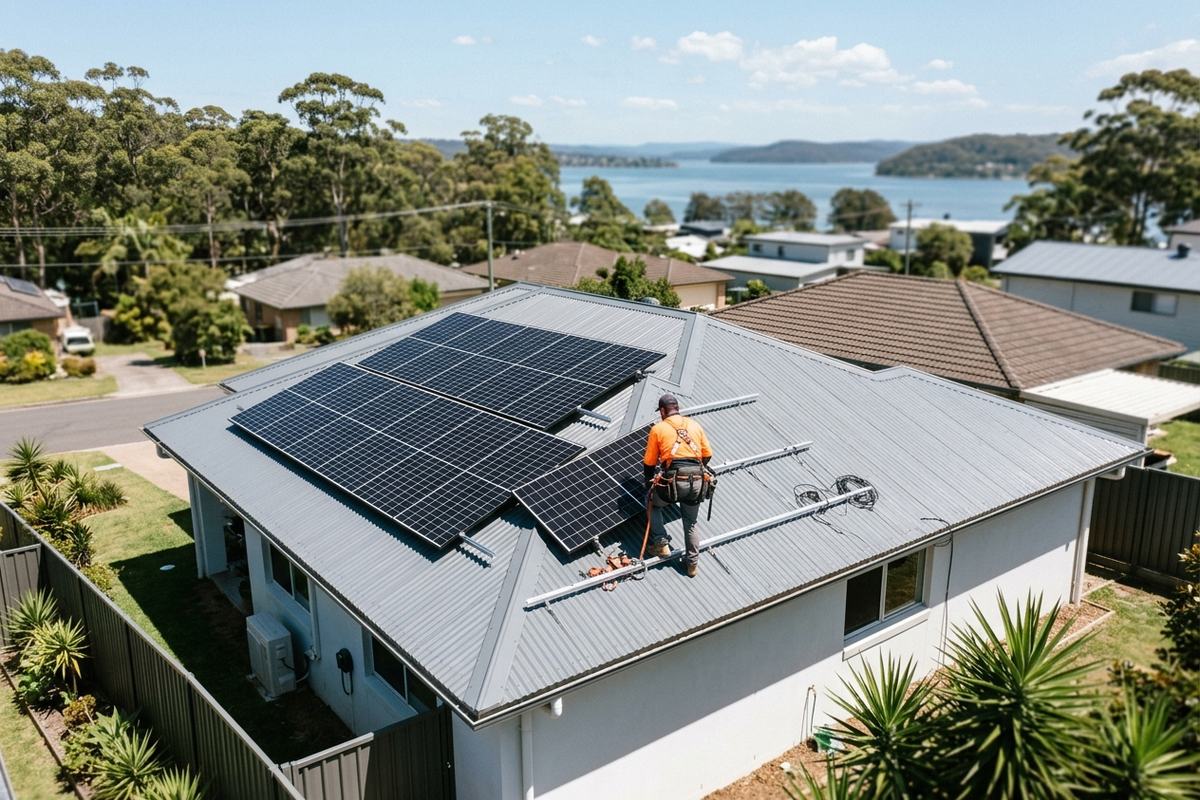
The first thing a good installer looks at is your roof. Orientation matters: north-facing panels capture the most energy across the day, while east and west splits can suit households that use more power in the morning and evening. Roof pitch, shading from trees or neighbouring homes, and the available area all shape what's possible. Many peninsula homes have Colorbond or tiled roofs in good condition, which are ideal, but it's always worth checking the roof's age and state before committing, so you're not installing over something that will soon need attention.
System size is the next decision, and it's where good advice pays off. The right size depends on how much power you use and when you use it, not just how much roof you have. Oversizing for its own sake wastes money if you're exporting most of the energy for a small feed-in return; undersizing leaves savings on the table. A proper assessment looks at your recent usage and your plans, an EV, a pool, or a growing family all change the picture.
Quality counts more than the headline price. Panels and inverters vary widely, and the cheapest option often isn't the best value across the ten to fifteen years you'll own the system. Look for reputable panels with strong performance warranties and an inverter correctly sized for the array. The inverter is the component that works hardest and is most likely to need replacing first, so it's worth getting right. It's also smart to fit a hybrid or battery-ready inverter even if you're not adding a battery straight away, it leaves the door open for home battery storage later without replacing equipment.
It helps to understand where the savings actually come from. Feed-in tariffs credit you for the excess power you export to the grid, but those rates are modest. The bigger wins come from using your own solar directly, running the dishwasher, washing machine, pool pump or air conditioning during daylight hours rather than at night. A good installer will explain how to shift your usage to self-consume more of what you generate, instead of promising unrealistic returns.
Accreditation and licensing are non-negotiable. Solar should be installed by a licensed electrician working to the current standards, and Clean Energy Council accreditation is what allows your system to qualify for the available rebates and incentives. Beyond the paperwork, a local installer who knows the peninsula, its homes, its weather and its rooflines, is the one who'll still be around if you ever need service or support down the track.
It's also worth thinking a step ahead. Even if a battery isn't in the budget today, designing the system to be battery-ready, leaving room on the switchboard, and choosing the right inverter now can save a lot of cost and hassle later. The same goes if an EV is on the horizon, a quick conversation about future plans means the system you install today still suits you in a few years.
Done well, solar is one of the better investments you can make in your home. The key is an honest assessment, quality gear, and a clean, compliant install by people who'll stand behind it. If you're weighing it up, a short conversation about your roof and your usage will tell you whether it stacks up for your place.
Once a system is in, a little ongoing attention keeps it performing. Quality systems come with monitoring so you can see what you're generating and quickly spot if something's off. Panels are largely maintenance-free, but the odd visual check for shading from growing trees, plus keeping an eye on the monitoring app, is enough to make sure you're getting what you paid for over the years.
When you're comparing quotes, ask about the things that actually matter: the specific panel and inverter brands and their warranties, who handles warranty claims if something fails, whether the installer is the one doing the work or subcontracting it, and whether the design is sized to your usage rather than a one-size template. The cheapest quote and the best-value quote are often not the same thing, and the difference shows up years down the track.
A final tip: think about the whole roof, not just today's system. If you might extend, add a patio, or replace the roof in coming years, a quick chat about that now avoids panels ending up in the wrong place or in the way later. Good planning at the start is what keeps a solar system working well for its full life.
Frequently Asked Questions
How long do solar panels last?
Quality panels typically carry performance warranties of around 25 years and keep generating well beyond that at a gradually reduced output. The inverter works hardest and is usually the first component to need replacing.
Does solar still work on cloudy Central Coast days?
Yes. Panels still generate in overcast conditions, just less than in full sun. A well-sized system accounts for seasonal and weather variation across the year.
Do I need council approval for rooftop solar?
Most standard residential rooftop installations do not require council approval, but a licensed installer confirms any local requirements and handles the grid-connection paperwork for you.
Can I add more panels later?
Often yes, if the roof space and inverter capacity allow. Designing the system with a little headroom now makes future expansion much simpler.
Talk to a Local Central Coast Electrician
Thinking About Solar for Your Woy Woy Home? Our licensed local team can assess your roof, talk through the right system size, and install it properly. Chat with our team for honest advice and a free quote.