
Switching to LED Downlights in Woy Woy: What to Know Before You Upgrade
Halogen downlights were fitted in countless homes through the 2000s, and plenty of them are still burning away in Woy Woy ceilings today. They throw a nice light, but they're energy-hungry, run extremely hot, and have a real fire history. Switching them to LED is one of the most popular and worthwhile electrical upgrades a household can make, though there's a bit more to a good job than simply popping out the old globe.
Why halogens are worth replacing
Old halogen downlights convert most of the energy they use into heat rather than light, which is wasteful and, more importantly, a safety concern. They run hot enough to scorch nearby materials, and over the years they've been linked to ceiling-space fires where insulation or debris sat too close to the fitting. LEDs run cool, use roughly a fraction of the energy for the same brightness, and last many times longer. Across a home with a dozen or more downlights, the saving on power and replacements is significant.
It's not always a simple globe swap
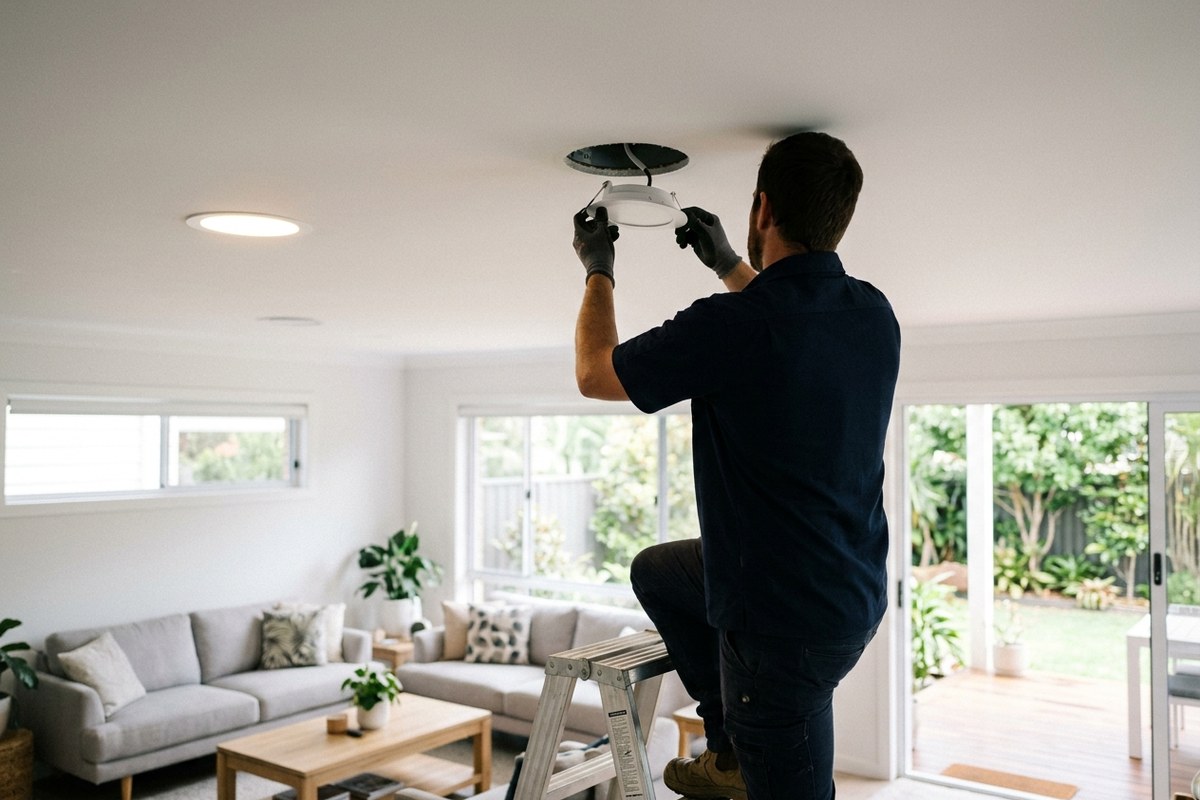
Some LED replacements drop straight into an existing fitting, but a proper upgrade often involves more. Old halogen fittings and their transformers may be aged, heat-damaged or no longer suited to the new lamps, and the safest approach is frequently to replace the whole fitting with a modern LED unit rather than just the globe. A licensed electrician can tell which fittings are fine to reuse and which should be replaced, and can spot any heat damage or dodgy old wiring hidden in the ceiling while the fittings are out.
Dimming and compatibility
One common frustration with DIY LED swaps is dimming. Many older dimmer switches were designed for halogen loads and don't play nicely with LEDs, causing flicker, buzzing or a limited dimming range. Getting smooth, reliable dimming usually means pairing LED-compatible dimmers with the right lamps, something an electrician can match up so the result actually works rather than being a source of ongoing annoyance.
Choosing the right light
LEDs come in different colour temperatures and beam characteristics, and the choice shapes how a room feels. A warmer white suits living areas and bedrooms, while a cooler, brighter light works well in kitchens, bathrooms and workspaces. The number and spacing of downlights matters too, too few leaves dark patches, too many wastes energy and can feel clinical. Planning the layout, rather than simply replacing what's there one-for-one, is a chance to light each room better.
Insulation and safety clearances
Modern fittings and the rules around them deal far better with the old fire risk, but clearances still matter. Many LED downlights are rated to sit closer to or in contact with insulation where older halogens needed gaps and guards, which is especially relevant in homes being insulated for comfort and efficiency. A licensed electrician installs fittings with the correct ratings and clearances for the ceiling, removing the hazard that made the old halogens a concern in the first place.
A small job with lasting benefits
For most homes, switching to LED downlights is a quick, affordable upgrade that pays back through lower bills, fewer globe changes, better light and reduced fire risk. For an older Woy Woy home still running original halogens, it's one of those jobs that's easy to keep putting off but genuinely worth booking, particularly if any of the existing fittings are showing their age.
Beyond the downlights
Downlights get the attention, but the same logic applies across the rest of the home. Old fluorescent battens in the laundry, garage or kitchen, exterior floodlights and security lights, and any remaining halogen or incandescent fittings are all candidates for efficient LED replacements. Tackling them at the same time as the downlights means one visit covers the whole house, and the combined saving on power and globe replacements is larger than doing one room at a time. It's also a chance to add sensors or timers to outdoor and security lighting so it only runs when it's actually needed.
Frequently Asked Questions
Can I just replace halogen globes with LED ones myself?
Some plug-in LED globes fit existing sockets, but many upgrades involve replacing the whole fitting or transformer, which is licensed electrical work. An electrician can also check for heat damage and wiring issues you can't see.
Why do my LED downlights flicker when dimmed?
Usually because the dimmer was designed for halogen loads and isn't compatible with LEDs. Pairing LED-compatible dimmers with suitable lamps generally fixes flickering and buzzing.
Are old halogen downlights really a fire risk?
They run very hot and have been linked to ceiling-space fires when insulation or debris sits too close. Modern LED fittings run far cooler and, installed correctly with the right clearances, greatly reduce that risk.
How much can LED downlights save me?
LEDs use roughly a fraction of the energy of halogens and last far longer, so across a home with many downlights the savings on power and replacement globes add up noticeably over time.
Talk to a Local Central Coast Electrician
Ready to upgrade to LED downlights? A local Woy Woy electrician can replace your old halogens with safe, efficient LED downlights and sort out any dodgy old fittings while they're at it.