

Do You Need Three-Phase Power? A Woy Woy Homeowner's Guide
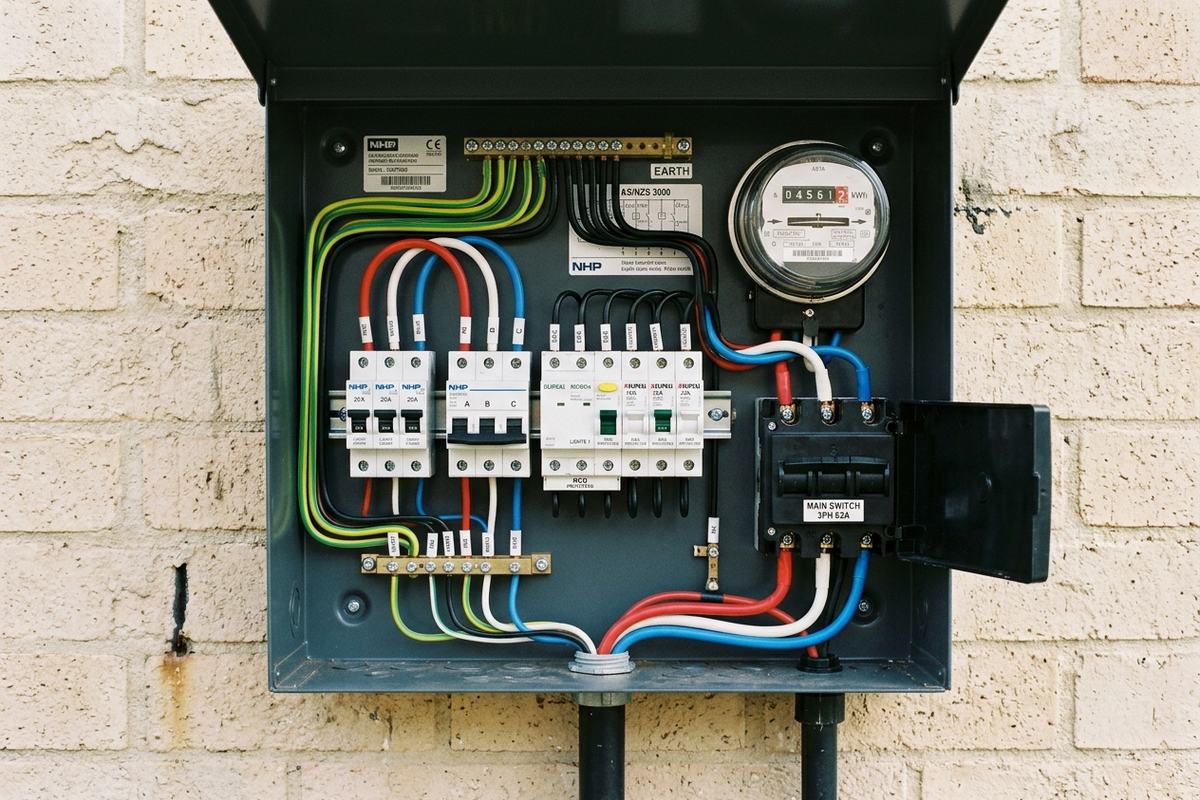
Most homes on the Woy Woy peninsula run on single-phase power, and for plenty of households that's perfectly adequate. But as homes add solar, batteries, EV chargers, ducted air conditioning, pools and workshops, more owners are asking whether they need three-phase power. It's a fair question, and the answer comes down to how much power the home draws at once and what's planned for the future.
Single-phase vs three-phase in plain terms
Single-phase supply delivers power on one active conductor, it's the standard connection for most houses and handles typical household demand well. Three-phase delivers power across three active conductors, allowing a much higher total load and spreading it more evenly. Think of single-phase as one lane of traffic and three-phase as three lanes: for a quiet household one lane is fine, but once several power-hungry things want to run at once, the extra lanes prevent congestion.
Signs single-phase might be stretched
A few clues suggest a home is bumping against the limits of its supply. Lights dimming noticeably when the air conditioner or oven kicks in, the main switch tripping when several large appliances run together, or an electrician flagging that the supply is near capacity are all worth noting. It's also common to hit the question when planning an addition, a large ducted system, a fast EV charger, a pool, a workshop with serious tools, or a granny flat, that would push total demand beyond what a single-phase service comfortably carries.
Where three-phase genuinely helps
Three-phase comes into its own for specific loads. Faster EV charging often needs it, larger ducted air-conditioning systems run better on it, big workshop machinery and pool equipment benefit, and some larger solar and battery setups are designed around it. Crucially, three-phase also lets heavy loads be balanced across the phases, which keeps the supply steadier and reduces the dimming and flickering that can come from big single-phase loads. For a household stacking several of these, it can be the difference between a system that copes and one that constantly trips.
Do most homes actually need it?
Honestly, many don't. A typical home with solar, a normal EV charger and standard appliances usually runs happily on a well-set-up single-phase supply. Three-phase is an investment, so it's worth doing only when the load genuinely calls for it or when future plans clearly point that way. A good electrician will look at the real numbers rather than upselling, sometimes the better answer is optimising the existing single-phase board, not converting the supply.
What an upgrade involves
Moving from single to three-phase is significant work. It involves coordinating with the network distributor, upgrading the service connection, and replacing or reworking the switchboard to suit three-phase, along with the relevant metering. Because it touches the main supply, it must be carried out by a licensed electrician and is something to plan rather than rush. The upside is plenty of headroom for everything a modern, electrified home might add over the coming years.
The smart move is to weigh it up before committing to a big new load. A short conversation about what the home runs now and what's planned will tell you whether single-phase will keep coping or whether three-phase is the sensible foundation for what's next.
Planning and timing an upgrade
Because a three-phase conversion involves the network distributor, the service connection and the switchboard, it's best treated as planned work rather than a last-minute fix. There's usually some lead time to coordinate the supply side, and the neatest moment to do it is alongside another major job, a renovation, a switchboard upgrade, or before a big new load like a pool or workshop goes in. Bundling it in avoids paying twice to open up the board, and means the home is ready the day the new equipment arrives. A licensed electrician scopes the whole thing up front so the supply, board and metering all line up.
Frequently Asked Questions
How do I tell if I already have three-phase power?
The main switch in the switchboard is the giveaway, a three-phase service has a larger main switch with three poles rather than one. A licensed electrician can confirm it in moments by looking at the board and the incoming supply.
Do I need three-phase to charge an EV at home?
Not usually. A standard single-phase home charger comfortably tops up a normal day's driving overnight. Three-phase only matters if you want the fastest home charging and your vehicle supports it, or if the home is already close to its single-phase limit.
Is upgrading to three-phase expensive and disruptive?
It's a substantial job because it involves the service connection, the switchboard and the network distributor, so it's planned work rather than a quick swap. Whether it's worthwhile depends on your loads, an electrician can tell you if it's justified before you commit.
Could I just optimise my single-phase supply instead?
Often, yes. Load management, a tidy modern board, and sensible circuit design can let a single-phase home handle more than owners expect. A good electrician weighs that up first and only recommends three-phase when the demand genuinely warrants it.
Talk to a Local Central Coast Electrician
Not Sure if You Need Three-Phase? A licensed local electrician can check your supply and your plans and tell you honestly whether three-phase is worth it for your home. Chat with our team to talk it through.