

Wiring an Older Woy Woy Cottage: What Character Homes Need
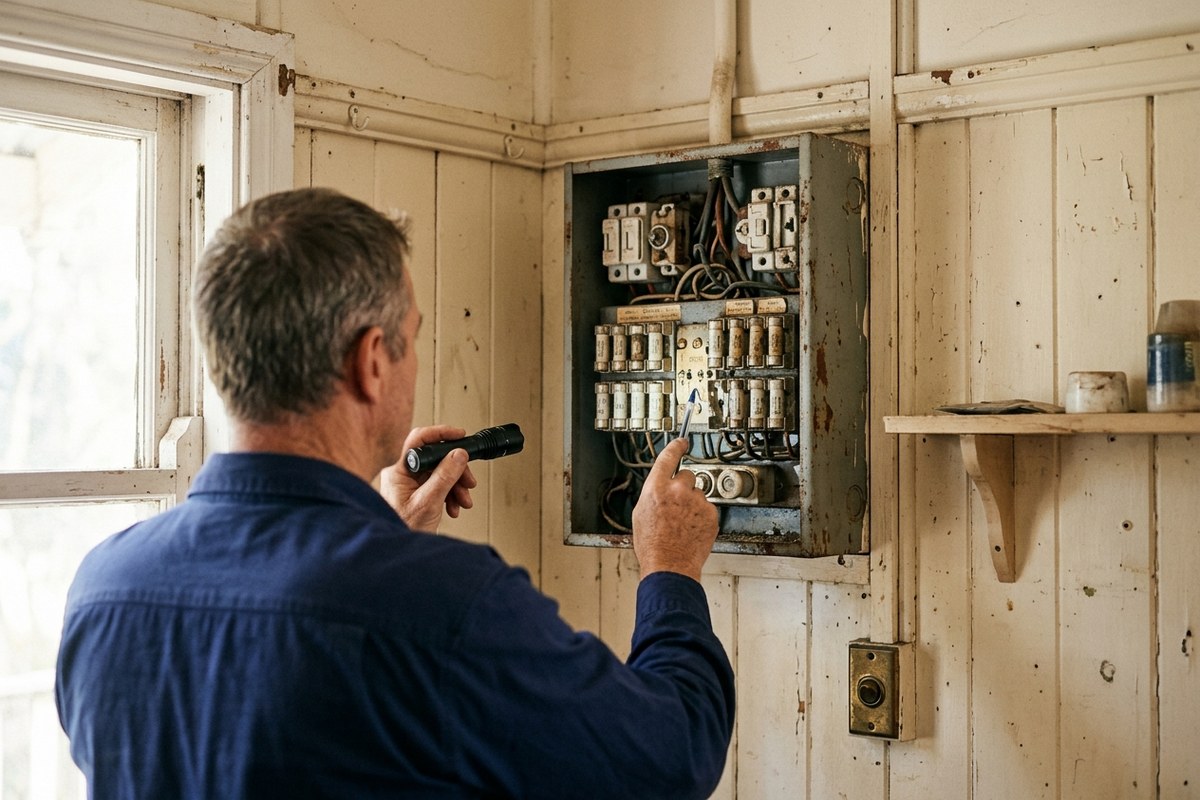
The Woy Woy peninsula is full of older cottages and post-war homes with genuine character, high ceilings, timber floors, and a story in every room. Behind that charm, though, the wiring often tells a different tale. Electrical systems installed decades ago were never designed for the way a modern household lives, and many character homes carry a patchwork of additions made over the years. Understanding what these homes typically need keeps the charm without the risk.
What's usually lurking behind the walls
Older cottages commonly have a handful of recurring issues. Original cabling may use rubber or cloth insulation that hardens and cracks with age. There are often too few power points, so the household runs on double adaptors and power boards. Earlier circuits may lack a proper earth, and the switchboard is frequently an ageing fuse box with little or no safety-switch protection. On top of that, well-meaning additions over the decades, an extra point here, a shed circuit there, can quietly overload a system that was modest to begin with.
Why character homes need a tailored approach
A character home can't simply be treated like a new build. The construction, lath and plaster, tongue-and-groove linings, limited roof or subfloor access, shapes how cabling can be run and how disruptive the work will be. A good electrician works with the house, using existing cavities and access points, planning routes that avoid tearing into period features, and staging the work where it makes sense. The goal is a safe, compliant system that respects the home rather than fighting it.
Full rewire or targeted work?
It's rarely all-or-nothing. After a proper inspection, an electrician can advise whether a character home needs a full rewire or whether replacing the worst circuits and the switchboard now will do, with the rest staged later. Sometimes the wiring is in better shape than expected and the priority is simply a modern board and more points; other times the cabling is clearly at the end of its life and a full rewire is the sensible call, especially if walls are coming off for a renovation anyway.
The upgrades that make the biggest difference
For most older cottages, a few improvements transform both safety and liveability: a modern switchboard with safety switches across the circuits, additional power points so the home isn't relying on adaptors, proper earthing throughout, and dedicated circuits for heavy modern appliances. None of this changes the character of the home, it just brings what's hidden behind the walls up to a standard that suits how people actually live today.
Heritage and the practical realities
Some peninsula homes have heritage considerations, and even where they don't, owners usually want to preserve original features. The practical answer is careful planning: discussing which walls can be accessed, where points and switches will sit, and how to keep cabling discreet. An experienced electrician will flag the trade-offs early so there are no surprises, and will always prioritise safety, because hidden, ageing wiring is exactly the kind of risk that doesn't announce itself until something goes wrong.
Owning an older cottage is a pleasure, and keeping it electrically sound is part of looking after it. A proper inspection is the best first step: it turns guesswork about what's behind the walls into a clear plan, so the home stays safe, comfortable and ready for modern life without losing what makes it special.
Compliance, insurance and peace of mind
There's a practical reason to keep an older home's wiring sound beyond day-to-day safety. Properly certified electrical work comes with a Certificate of Compliance, useful documentation for insurers and at sale time, and proof the work was tested to the current standards. Some insurers take a closer interest in very old wiring, and a known-sound system removes a common worry. For buyers and sellers of character homes on the peninsula, the state of the wiring quietly affects both value and confidence, so addressing it isn't only about safety today, it protects the home as an asset and makes it easier to insure and to sell down the track.
Frequently Asked Questions
How do I know if my old cottage needs electrical work?
Signs include too few power points, an old fuse-style switchboard, no safety switches, flickering lights, and warm or discoloured points. The only reliable answer comes from a licensed electrician inspecting the wiring and board, since much of the system is hidden.
Will I have to tear the house apart to rewire it?
Not necessarily. A skilled electrician uses existing cavities, roof and subfloor access, and careful planning to minimise damage, and stages the work where possible. The least disruptive time is during a renovation when linings are already off.
Is it safe to just leave old wiring if nothing seems wrong?
Ageing wiring is risky precisely because problems develop unseen behind the walls. Cracked insulation and loose connections can lead to shocks or fire without obvious warning, so an inspection is worthwhile even when everything appears to work fine.
Can older homes still get modern safety switches?
Yes. A modern switchboard with safety switches can be fitted to almost any home, and it's one of the most valuable upgrades for an older cottage. An electrician confirms what the existing supply and wiring need to support it safely.
Talk to a Local Central Coast Electrician
Love Your Old Cottage? Let's Keep It Safe A licensed local electrician can assess a character home's wiring honestly and plan any work to suit the house. Chat with our team for a clear picture of where yours stands.